Replacing support tickets with self‑serve setup
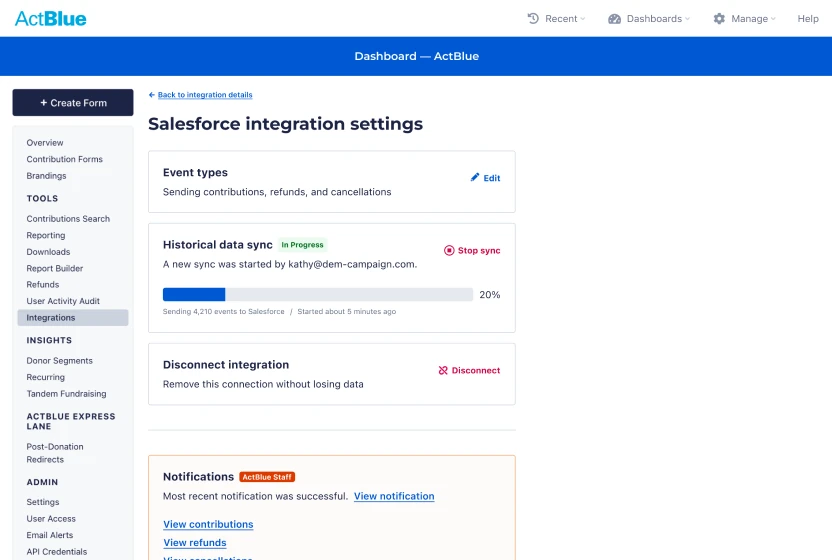
Led design of the Salesforce integration end to end. Admins fix sync issues themselves, cutting support costs an estimated $1.5M a year.
Senior UX EngineerPlano, TX (Hybrid)2025 to 2026
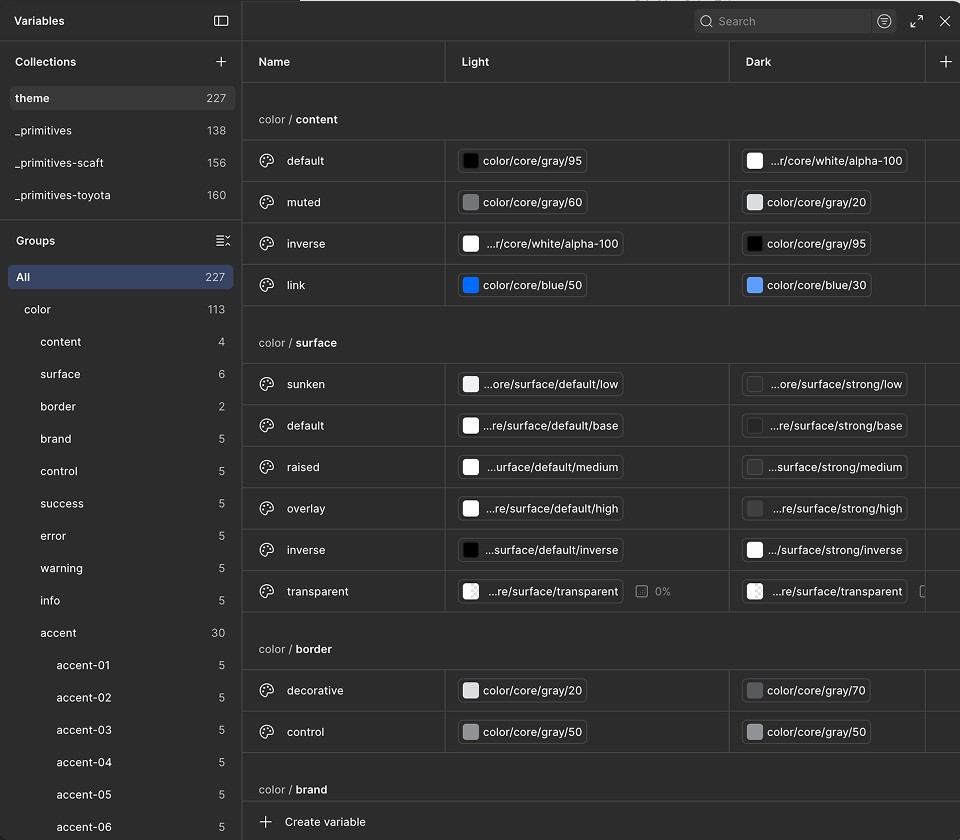
I led token architecture, the Figma component library and technical planning for PRIME, Toyota Motor North America's design system. I built a multi-brand token framework in TypeScript and an automated pipeline that syncs it with Figma variables.
The framework defines 680 primitive and theme tokens and 120 component tokens. It supports SCaFT and Toyota today and is set up to add Lexus and more.
I joined Toyota as a UX Engineer to apply my design and code expertise to PRIME. PRIME is an existing React design system with 80+ components in production. It served one organization, Supply Chain and Fulfillment (SCaFT). The goal was to expand it globally across multiple brands in marketing, dealer tooling and manufacturing.
My role in the token effort was to scale the system beyond PRIME. Consumers could be React, Angular and Swift applications, so the framework could not depend on PRIME's React components.
Two things shaped the plan. Tokens arrived as a design best practice while the business was still setting its scaling goals. Partway through the project, engineering changed course on a planned migration from MUI v5 to shadcn/ui, so I adjusted the implementation plans.
With codebases evolving and budgets still taking shape, I took technical ownership of the token framework and the automation between Figma and code.
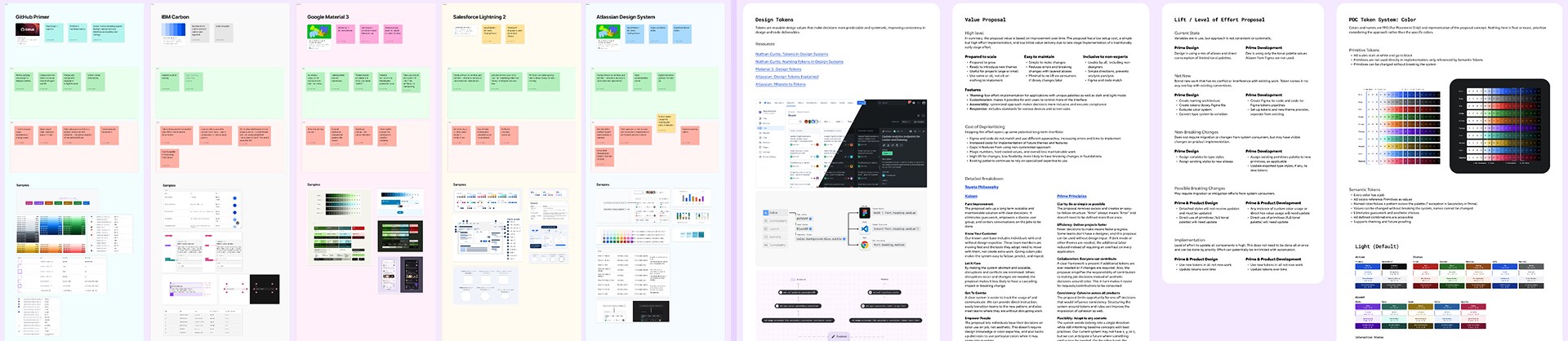
I integrated multi-brand tokens into the existing Figma libraries and kept refactors to a minimum. Binding tokens to assets was expected to make migration easier for product teams and simplify developer handoff.
I wrote the token framework in TypeScript for engineering teams to build on. PRIME already used TypeScript, so the framework fit the team's stack. I chose it over Style Dictionary for type safety, code generation and easy fit with frontend toolchains. It replaces third-party plugins such as Tokens Studio.
To show that Figma and code could stay aligned, I built a CLI in Node.js and TypeScript, with AI agents. It uses Figma's REST API to pull library snapshots and compare variables with the TypeScript definitions. It then creates, updates or deletes Figma variables to match the code. I used it to build the token system.
I designed and planned an automated pipeline that would read tokenized components. It would write Markdown specs with component logic, token maps and CSS snippets for developers and AI coding agents.
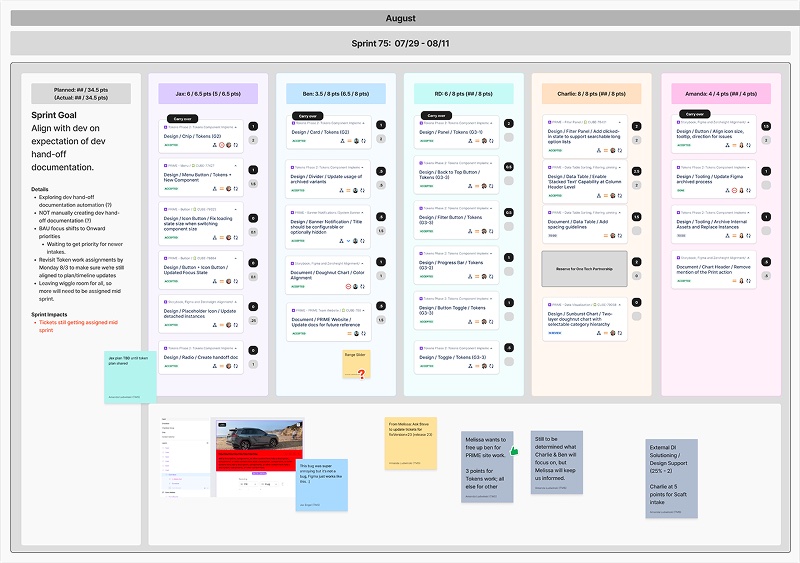
I ran sprint planning for five contributing designers and held alignment meetings with engineering throughout the year, until I handed the work off. I wrote 12 epics and 200+ stories, creating and importing the stories in bulk with Python and AI.
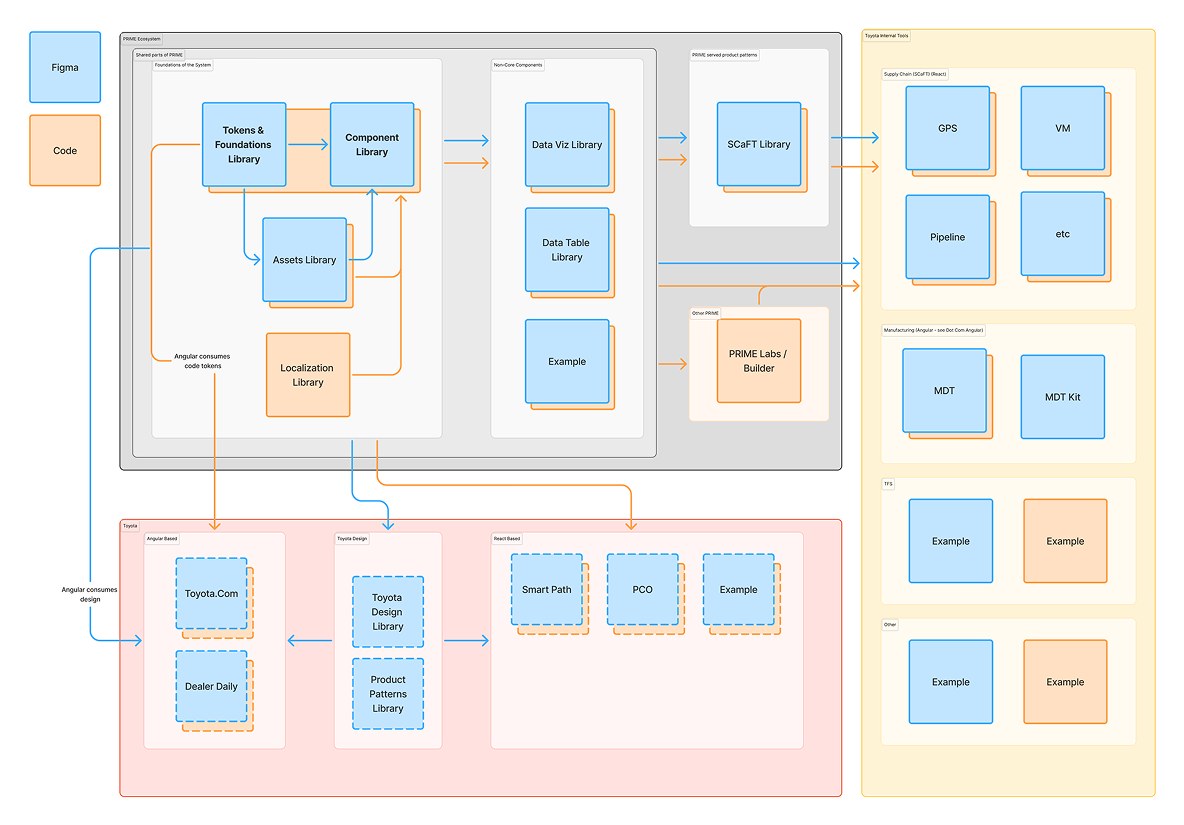
I architected the multi-brand token framework and the automation that syncs it with Figma. I applied the tokens to Figma components manually and through automation where possible. When I left, 15 components were mapped and 3 more were in development. The coded components were in progress.
In the short term, 40 SCaFT product teams were expected to adopt the tokens across 10 web apps, with more as themes expand. The framework gives design and engineering one source of truth, and new brands and themes can be added to it. Once the tokens are fully applied, they are expected to reduce the manual upkeep between design and code.
Looking back, I would change two things.
Priorities shifted several times, and some decisions took more than a month. I would define fallback plans from day one, so the team keeps shipping small, useful pieces while direction settles.
Token work shared the engineering calendar with other priorities, and stakeholders changed over the year. I would ask for a named engineering sponsor early, so the work has a clear owner and the context carries through each change.
Led design of the Salesforce integration end to end. Admins fix sync issues themselves, cutting support costs an estimated $1.5M a year.
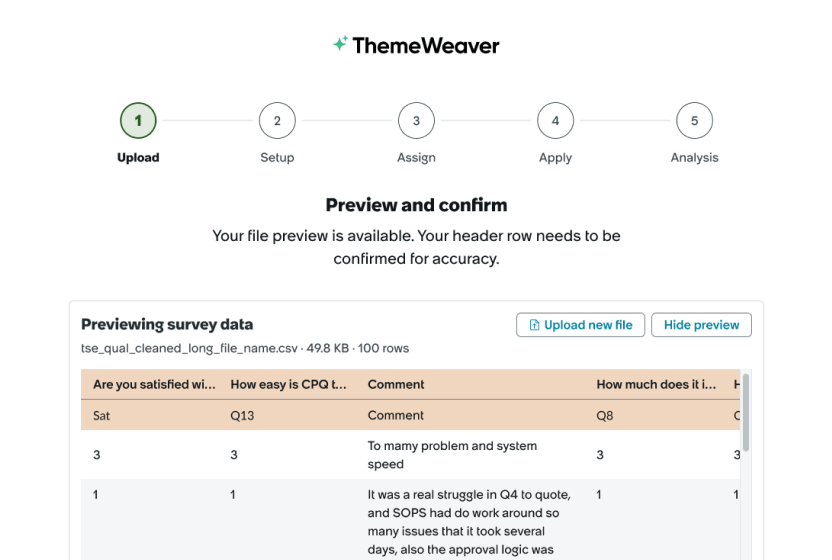
Shaped the experience of an internal AI tool that codes open-ended survey responses into themes. Coding by hand took 10+ hours per 100 responses.